Deep Bound Research
Building distributed cognitive systems for the next generation of AI.
Deep Bound Research is an independent AI systems research lab focused on distributed cognitive systems—architectures that enable frontier models, local models, software agents, humans, and computing infrastructure to function as a unified cognitive system. Our research spans multi-model orchestration, runtime governance, replayable execution, adaptive intelligence, and evidence-based autonomy.
Research Areas
- Distributed Cognitive Systems
- Multi-Model Orchestration
- Adaptive Intelligence
- Runtime Governance
- Evidence & Replay Systems
- Human–AI Collaboration
- Local & Frontier AI
- Autonomous Infrastructure





Determinism Is All You Need
The dominant failure mode of agentic AI is not insufficient intelligence — it is insufficient determinism. This paper introduces Transactional Cognition and Bounded Operational Determinism as the foundational architecture for reliable, replayable, and governable AI systems at infrastructure grade.
Dexter
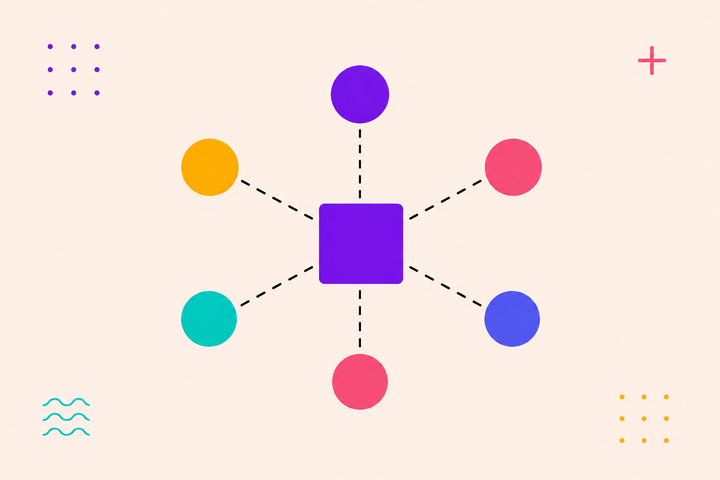
A governed cognitive runtime architecture for operational intelligence systems, transactional reasoning, deterministic orchestration, and artifact-centric cognition.

Decision Sovereignty
A systems architecture framework for preserving institutional decision sovereignty as frontier AI integrates into national security, civil administration, and high-consequence decision systems — introducing the Irreversible Action Threshold, the structural failures of human-in-the-loop, the leverage asymmetry of Remote Cognitive Infrastructure, and the Sovereign Decision Stack as a layered architecture for subordinating machine cognition to human authority.

From Context Engineering to Hierarchical Engineering
The evolution of AI systems is increasingly constrained not by model capability, but by context organization. This paper argues that context engineering is not the terminal abstraction for scalable AI systems, and introduces Hierarchical Engineering: the discipline of structuring cognition as layered operational infrastructure with governed visibility, scoped memory, and deterministic coordination semantics.
Transactional Cognition
ACID-inspired boundaries for agentic AI execution — bounded, observable, and reversible where possible.
Bounded Operational Determinism
Stabilizing behavior under explicit operational constraints, governance state, and evidence inputs.
Evidence-Attested Execution
Runtime traces and ledgers for action provenance — what happened must be inspectable after the fact.
Decision Sovereignty
Preserving human authority around irreversible actions and high-consequence commitments.
Agentic Systems Reliability
Reliability engineering for long-horizon autonomous software — governance before scale.
Operate. Test. Design. Archive.
Flagship research prototypes on the public surface. Operate, test, design, and archive — internal systems are labeled by maturity and availability, not presented as general products.



Plateau
Invention Studio / Design-Space Intelligence
An invention studio and design-space intelligence system for generating, comparing, scoring, and archiving candidate designs across software, hardware, chips, drones, machines, interfaces, and physical systems before engineering commitments are made.
Berra Industries
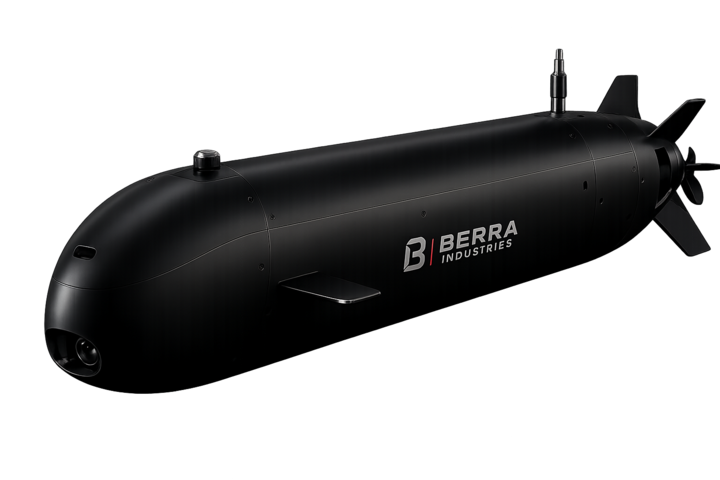
Autonomous systems division built from Plateau research. Developing rugged AI-powered maritime, aerial, and ground platforms for real-world deployment.
Current Systems
- M1 Barracuda
- Badlands Runtime
- Hive Fleet Architecture
Plateau explores future systems. Berra Industries operationalizes them.
Cerberus
Multi-Head Reasoning & Evaluation Harness
A three-head reasoning and evaluation harness built on structured disagreement: one head proposes, one head critiques adversarially, and one head arbitrates and verifies.
StrongHold
Adaptive Storage & Archive Intelligence
A smart storage system for adaptive compression, archival intelligence, retrieval, and restoration — storage that understands artifact structure and can explain its own strategy decisions.
Evidence Ledger
Papers, governance charters, and research surfaces with explicit status and evidence level. External links appear only when verified.
Flagship systems paper on transactional cognition, bounded operational determinism, and governed agent runtimes.
Public draft on irreversible action thresholds, human authority, and institutional decision architecture.
Public draft on transactional reasoning and operational research systems.
Public governance charter for sovereign AI workspaces and runtime invariants.
Public research releases, technical notes, and architecture papers on this site.
Planned open-source retrieval and context-ranking engine; repository not yet public.
Technical note on simulation trace models; release pending review.
Public-safe defensive harness overview; internal implementation withheld.
Public papers, governance artifacts, and prototype systems under active development. Planned repositories are listed but not linked until release criteria are met.
Independent research with institution-grade documentation.
DBRL is currently founder-led by Brandon Butera and operates as an independent research practice — not a large institute. Public artifacts, governance charters, and staged system labels are published so claims stay paired with inspectable evidence.
Founder profilePublic Research Releases
Selected public drafts and working papers. Full index includes technical notes and architecture notes.
Determinism Is All You Need
The dominant failure mode of agentic AI is not insufficient intelligence — it is insufficient determinism. This paper introduces Transactional Cognition and Bounded Operational Determinism as the foundational architecture for reliable, replayable, and governable AI systems at infrastructure grade.
Dexter
A governed cognitive runtime architecture for operational intelligence systems, transactional reasoning, deterministic orchestration, and artifact-centric cognition.
Decision Sovereignty
A systems architecture framework for preserving institutional decision sovereignty as frontier AI integrates into national security, civil administration, and high-consequence decision systems — introducing the Irreversible Action Threshold, the structural failures of human-in-the-loop, the leverage asymmetry of Remote Cognitive Infrastructure, and the Sovereign Decision Stack as a layered architecture for subordinating machine cognition to human authority.
From Context Engineering to Hierarchical Engineering
The evolution of AI systems is increasingly constrained not by model capability, but by context organization. This paper argues that context engineering is not the terminal abstraction for scalable AI systems, and introduces Hierarchical Engineering: the discipline of structuring cognition as layered operational infrastructure with governed visibility, scoped memory, and deterministic coordination semantics.
Distributed cognitive systems, built and published with evidence.
For research partnerships, technical review, sponsorship discussions, or collaboration on distributed cognitive systems — contact the lab directly.